
Morehouse Parish Arrest Records and Charges
Morehouse Parish arrest records begin with law enforcement. The Sheriff's Office, jail, LAVNS, VINE, and booking channels may show custody status, booking identifiers, booking date, charges listed at booking, bond, release status, and the court connected to the arrest when public. The Clerk of Court is not the jail roster custodian. The arrest side belongs to sheriff and custody channels.
The court charge record is different. After an arrest, the Fourth Judicial District Attorney may screen the matter, accept charges, refuse charges, amend charges, reduce charges, or file a bill of information or other charging document. Once filed in court, the charge becomes part of the Morehouse Parish criminal case record. The full case file and outcome are handled on the Morehouse Parish criminal court records path.
The Fourth Judicial District Attorney media and prosecution updates source gives public context for prosecutions and DA activity in the district that includes Morehouse Parish.

DA prosecution updates are not the court file, but they show why the prosecutor's role is central once an arrest moves toward formal charges.
Find Morehouse Parish Arrest Records
A complete search checks the arrest, custody, prosecutor, and court stages separately. The official Morehouse LAVNS endpoint is the parish jail roster path for current custody. VINELink can provide custody search and notification registration. The Louisiana DOC offender locator applies to sentenced state-prison custody, not ordinary Morehouse Parish pretrial jail. The Sheriff's Office is the local contact for booking records, jail records, and incident materials that are not visible online.
- Check current custody first through Morehouse LAVNS, VINELink, or the Sheriff's Office if the arrest is recent.
- Use the person's full legal name, date of birth if requested, and any booking or case number from jail paperwork.
- Check whether the DA filed charges in district court or whether the charge was refused, reduced, or amended.
- Search the court record by defendant name or case number once the case is filed.
- Request certified charge, disposition, or sentencing records from the Clerk if legal proof is needed.
There is no official sheriff or police mobile app with an app-only Morehouse arrest-record lookup located in the research. No app should be assumed. Use the official custody, sheriff, DA, and clerk channels instead.
Charges After Arrest in Morehouse Parish
Charges after arrest can change. A booking charge may reflect what law enforcement believed at arrest. A court charge reflects what the prosecutor filed or what the court accepted. The DA site identifies adult-crime, juvenile-crime, traffic, victim-assistance, child-support, and related divisions. Morehouse adult-crime inquiries route to the DA's Morehouse Parish office phone listed in the research, and the DA office is separate from the sheriff and clerk.
| Complaint | Bill of Information | Indictment | |
|---|---|---|---|
| Filed by | Officer or prosecutor depending on stage | Prosecutor | Grand jury |
| Common use | Initial accusation or lower-level start | Many felony prosecutions in Louisiana practice | Serious felony prosecution where grand-jury action is used |
| Record role | Can start or support the case | Sets the court-facing charge | Sets the grand-jury charge |
| Where to verify | Sheriff, DA, or court depending on stage | Clerk's criminal case file | Clerk's criminal case file |
Louisiana court terms can matter. A bill of information is a prosecutor-filed charging document. An indictment is a grand-jury charging document. A disposition is the outcome. A sentence is the punishment after conviction. Those terms should not be collapsed into the single word "charge."
Morehouse Parish Charge Status
Charge status is the core reason arrest records and court charge records should be read separately. The charge listed at booking may not match the charge filed in court. A prosecutor may reduce, amend, add, or dismiss charges. The court may later show guilty, not guilty, dismissed, nolle prosequi, acquittal, sentence, or probation entries.
| Status | What It Means |
|---|---|
| Pending | The charge or case is active and has not reached final disposition. |
| Amended | The filed charge changed from an earlier version. |
| Reduced | The prosecutor or court record reflects a lower or different charge than first listed. |
| Dismissed | The charge was ended by court action or prosecution decision. |
| Nolle prosequi | The prosecutor declined to continue that charge in court. |
| Convicted | The case ended in a guilty plea, verdict, or adjudicated conviction. |
Morehouse Parish Charges vs Convictions
An arrest or filed charge is not proof of guilt. Morehouse Parish arrest records can show allegations or booking charges. Morehouse Parish court charge records can show charges filed by the prosecutor. A conviction requires a plea, verdict, or other adjudicated outcome. Always read the disposition and sentence before treating a charge as final.
| Charge | Conviction | |
|---|---|---|
| Meaning | Accusation, booking charge, or filed court charge | Guilty plea, guilty verdict, or adjudicated outcome |
| Can change | Can be refused, amended, reduced, dropped, or dismissed | Can be appealed or later affected by expungement if eligible |
| Where found | Booking record, DA screening, or clerk case file | Certified disposition, judgment, or sentencing minutes |
| Best caution | Do not treat as guilt | Read sentence, probation, costs, and restrictions |
Bail and First Appearance Records
After arrest in Morehouse Parish, a person may be booked, screened, held for bond or first appearance, or released depending on the charge, court order, judge, DA action, weekends, holidays, and case facts. Louisiana recognizes several release paths, including cash, surety, personal recognizance, and no-bond situations depending on law and order.
The Louisiana bail undertaking statute is relevant because bond can appear in arrest, custody, and court records.
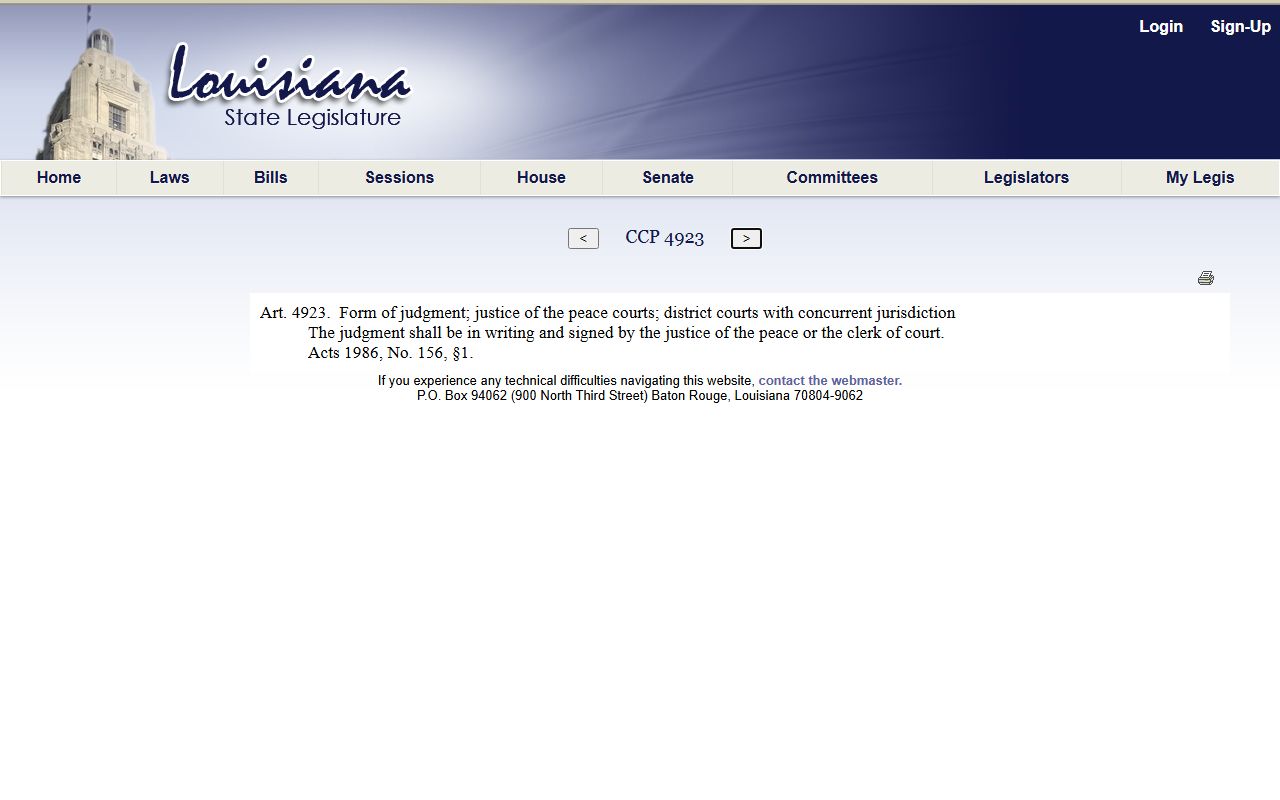
Bond entries should be checked against current custody and court status because release conditions can change after a hearing.
Note: A bond amount in an old record does not prove a person is still in Morehouse Parish custody.
Charge Codes and Severity Levels
Charge records may use offense names, statute citations, and severity descriptions. The DA research distinguishes adult defendants age 17 or older for adult-crime prosecution and describes felonies as offenses punishable by death or imprisonment at hard labor. Misdemeanors are non-felonies, generally with punishment within the misdemeanor range described by law. Juvenile prosecution exists, but juvenile records are not ordinary public records.
- Felony
- A more serious offense category prosecuted in district court when filed.
- Misdemeanor
- A non-felony offense that may appear in district, city, mayor's, or other local court records depending on the case.
- Capias
- A Louisiana custody order that can appear in criminal or court contexts.
- Restitution
- Money ordered to compensate a victim as part of a criminal case.
Expunging Morehouse Parish Arrest Records
Expungement is a court process that limits public access to qualifying arrest and conviction records. It does not mean every government record is destroyed for every purpose. Louisiana law can leave access for law-enforcement, prosecutor, licensing, or other authorized uses. A Morehouse Parish expungement should start by gathering the arresting agency, docket or case number, charge, disposition, sentence or probation information, dismissal documents, and any proof of completion.
The Louisiana motion to expunge record statute supplies the Article 971 framework for qualifying arrest and conviction records.
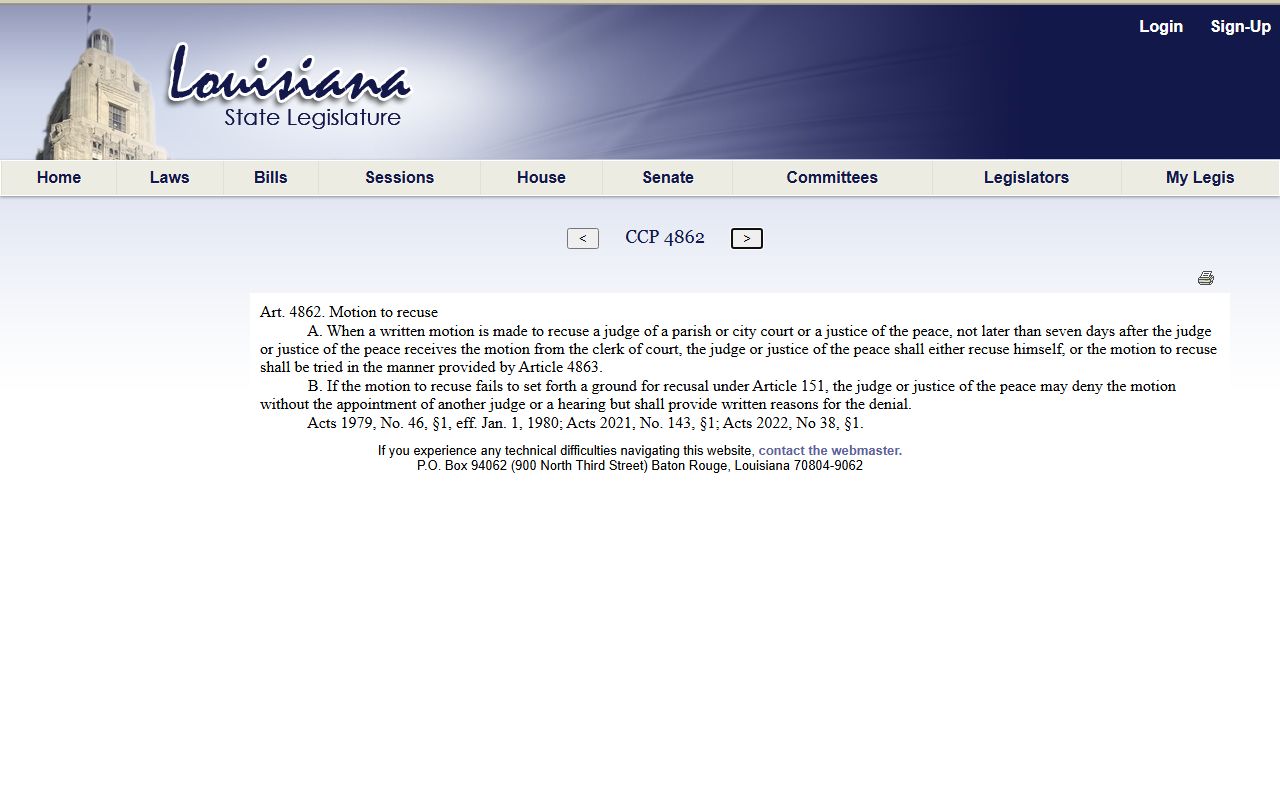
The expungement source is relevant to both arrest records and court charges because a filer may need the arrest, case number, charge, and disposition to prepare the motion.
Louisiana Code of Criminal Procedure Article 894 can affect misdemeanor suspended sentence and probation context relevant to eligibility questions.
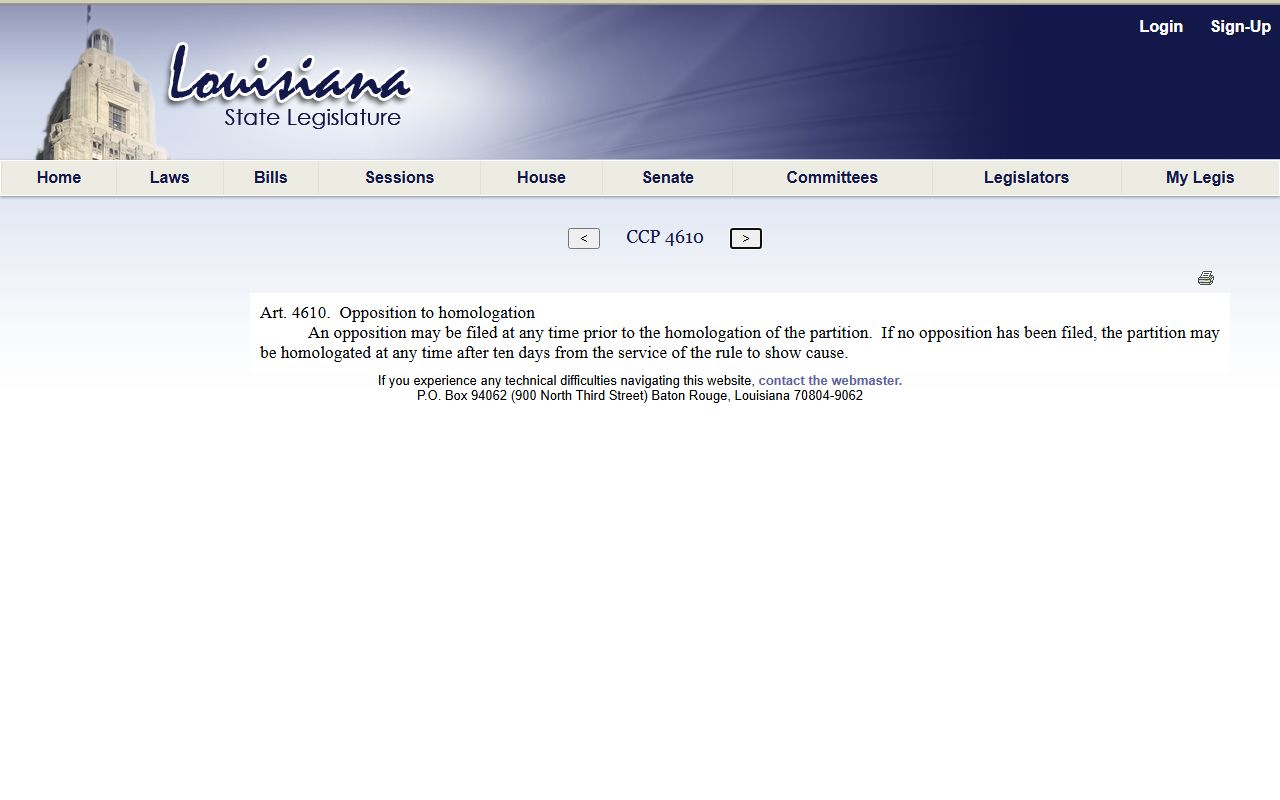
Eligibility should be checked against the actual court disposition, not just a booking charge or online custody record.
Sealed vs Expunged Charge Records
Sealed and expunged records are both restricted, but they are not the same. Sealing can close a record from ordinary public access by law or court order. Expungement follows a statutory motion process for qualifying arrest or conviction records. Juvenile charges, adoption-related material, victim details, protected addresses, and mental-health information can also be restricted.
| Sealed | Expunged | |
|---|---|---|
| Public access | Closed or limited by law or order | Public dissemination limited after qualifying order |
| Record existence | Record remains with court or agency | Record may remain available for authorized government uses |
| Typical trigger | Case type, juvenile status, safety need, or court order | Motion, eligibility review, notice, and judge order |
| Search result | May be denied or redacted | May not appear in public search after processing |
Morehouse Charge Record Access Channels
The correct channel depends on stage. Sheriff's records cover arrest and booking. LAVNS and VINELink cover custody status and notifications. The DA screens and files charges. The Clerk maintains the filed criminal court case. OMV handles driver records. Federal cases use PACER and federal court systems. A single search result rarely answers all of those questions.
| Stage | Best Morehouse Parish channel |
|---|---|
| Arrest / booking | Morehouse Parish Sheriff's Office, LAVNS, VINELink |
| DA screening | Fourth Judicial District Attorney office or DA public-records channel where public |
| Filed charge | Morehouse Parish Clerk of Court criminal case file |
| Disposition / sentence | Certified clerk minutes, judgment, disposition, or sentencing record |
| Traffic charge payment | DA traffic and official citation-payment channel when payable |
For public defender matters, use the Louisiana Public Defender Board office locator for current district contact information. Appointment of counsel is a court-driven eligibility process, not a charge-record search tool.